
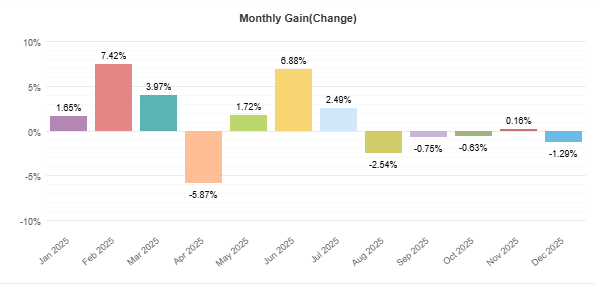
To maintain my passive investor street cred, I wanted to provide an update on what my bots and crypto have been doing. As is always the case, they don’t ask my permission; they just do.
Today, let’s take a peek at my algo trading bot, Octane.
With the oldest trade preparing to reach its one-year anniversary next week, it is very difficult to keep the optimism high. As with any algo bot, they don’t ask permission to grow or drain your account. They do what their code tells them to do. If the bot has a few great months, it is easy to praise the bot providers. “Oh, what an insightful bot they have provided to the passive investing community.” When it goes bad, the bot providers are quick to say, “These are crazy market conditions. If this political or that political event wouldn’t have happened, the bot would have been fine. And, we did mention you shouldn’t put any money into your bot-managed account you can’t afford to lose, right?”
Ah yes, the “extinction budget” conversation. That’s what the pros call it—the amount you can lose without affecting your retirement or your marriage. Turns out, when I set up this bot, I should have asked myself: “Can I lose this money completely?” At 35% down, I’m getting uncomfortably close to answering that question in practice rather than theory.
If it is not obvious, I am reevaluating how patient to be with this bot. I have been telling myself, “This bot has done a great job navigating the crazy spring of 2025. It needs just a little longer.” Not sure when “longer” will arrive, but it needs to be soon.
Here’s where the math gets personal: My monthly bot fees mean Octane needs to earn around [X]% annually just to break even—before trading costs, slippage, and taxes. That’s called the “fee hurdle,” and it’s a number I conveniently ignored when I was optimistic. The decision tree is embarrassingly simple:
- Can you lose this money completely? (Getting tested on this one)
- Has the bot beaten the fee hurdle historically? (Narrator: It has not)
- Should you keep throwing good money after bad? (Also no)
Ideally, the bot will redeem its coded soul and let me exit gracefully. If it doesn’t, I am pondering how big a hit to take to become unburdened from the whole algo-trading world.
In fairness, I think newer bots are quicker to utter loud curses before taking a loss. They don’t hold on as tightly as Octane did to the trades that jeopardized its soul. (If I stop paying the monthly fee, its soul ceases to exist—which is both poetic and irritating.)
The rational part of my brain says: “Write down your bot budget ceiling and actually stick to it. This number doesn’t change when the bot provider suggests you ‘scale up’ or ‘add more capital.'”
The sunk-cost-fallacy part of my brain says: “But you’re SO CLOSE to breaking even… maybe just one more month?”
If Octane somehow navigates out of this debacle with its image slightly redeemed, I may consider reducing its account size significantly. If it continues down the path that leads to a flaming exit, I can’t see any scenario where I’d ever play chicken with an algo trading bot again. When drawdown hits 45% on the bot-managed account, the bot starts closing trades automatically. We’re uncomfortably close to this point. If we reach it, I would theoretically come out of the deal with somewhere around 55% of my account value.
The lesson I should have learned on Day 1: (This is a peak on another series I am putting together) When a bot provider mentions you shouldn’t invest money you can’t afford to lose, they’re not being cautious—they’re being prophetic. That’s not a warning; that’s the business model.
More updates to follow, assuming my bot doesn’t achieve complete enlightenment (zero balance) before then.


