
TL;DR — What This Liquidity Pool Experiment Is Teaching Me
I’m running small crypto liquidity pool tests to learn, not to get rich. Automation sounds great, but fees and range choices matter. Wide and medium ranges are working well. Tight ranges cost more attention. Small positions are saving me from expensive lessons.
Learning From Small Crypto Liquidity Pool Experiments
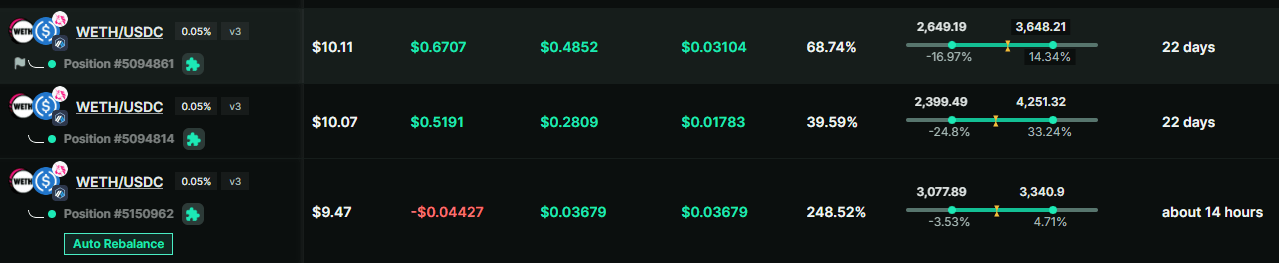
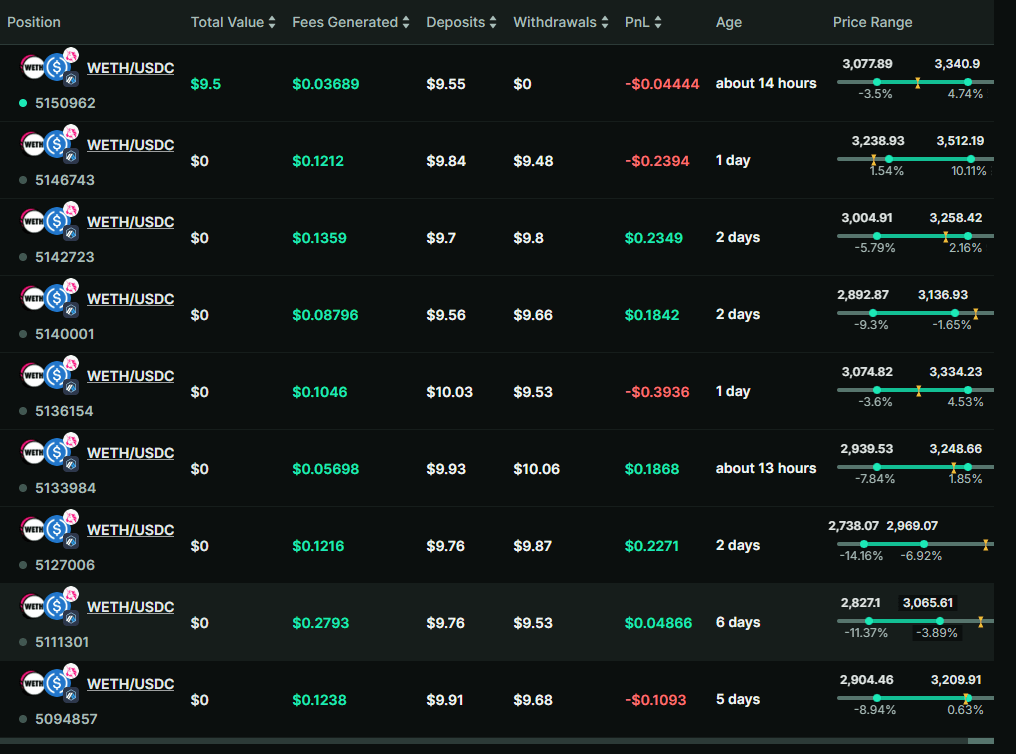
My three test liquidity pool positions are doing what I hoped they would do. They are teaching me things. They are not making me much money.
Since learning was the goal, I’m comfortable with that outcome. Other liquidity providers may get very different results. Settings matter. Liquidity pairs matter. Timing matters.
For me, future decisions will be based on my own results. Watching your own crypto behave in real time is the fastest way to learn.
Why Automation Sounds Better Than It Feels
I still like the idea of automated liquidity providing. On paper, automation looks perfect. In reality, my current automation settings are lagging behind my wider liquidity ranges.
On top of that, I’m fairly sure I caused one issue myself. I adjusted a “high-APR” position that didn’t need help. That kind of tinkering usually comes with consequences.
Even so, the automated positions are staying in range. The problem is the fees. They slowly eat into already meager profits.
Fortunately, this lesson is happening on a $10 test position. Paying small tuition beats learning this lesson with real conviction-sized capital.
Wide and Medium Ranges Are Doing Their Job
The wide and medium liquidity ranges are behaving exactly as expected. That part has been encouraging.
The wide range is producing close to a 40% APR. The tighter range is hovering near 70%. These numbers aren’t guaranteed, and they aren’t risk-free.
However, when a range is set correctly, the downside is fairly controlled. Fees continue to generate until WETH moves out of the top of the range. At that point, most of the USDC drains out.
The position stays open and waits. Sometimes price comes back down. Sometimes it doesn’t. Crypto prefers flexibility over certainty.
Expanding Beyond WETH/USDC
Next, I want to expand this experiment beyond WETH/USDC liquidity pools. The goal is to test the same wide, middle, and tight range strategy across additional pairs.
During slower market periods, price movement may be more limited. That can make tighter ranges more effective.
Each tight-range position costs fees to open. If a pair moves less often, those fees may be earned back faster than with wider ranges. In the right conditions, tighter ranges can outperform on efficiency alone.
If that’s going to happen with WETH/USDC, it’s not happening right now.
What Comes Next
Looking ahead, my babysitting responsibilities should lighten up around Christmas. When that happens, I plan to open multiple small liquidity positions across several crypto pairs.
The goal isn’t to chase maximum APR. It’s to gather data, refine settings, and understand how different liquidity pools behave over time.
With small investments, I can experiment freely. I can learn without stress. And I can make better decisions when the positions eventually get larger.
Learning comes first. Profits follow later. Usually.


