
With Solana perking up again, my inner optimist decided it was time to grab a shovel and plant a little crypto crop. Why? Because yield farmers don’t just sit around waiting for the sun—we test the soil, throw in a few seeds, and see if the harvest could feed us (or at least buy more coffee).
Testing the Field
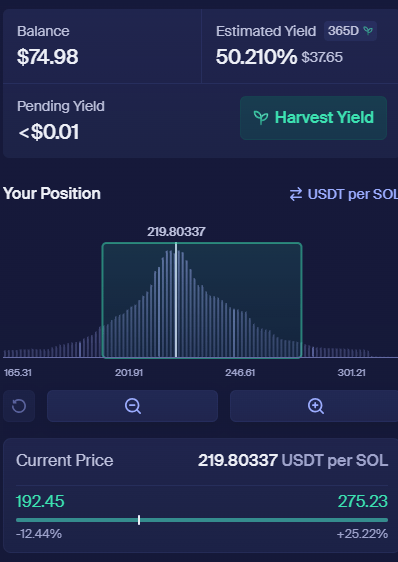
I set up a small test farming position with about $75. That’s barely half a fancy dinner at Olive Garden, so if I wreck it, no big tears. But the goal isn’t profits right away—it’s information. Yield farming is part money, part science experiment, and part “let’s see if this cow kicks.”
The strategy? Picking a range where Solana (SOL) can do its little price dance without me losing sleep. I chose a range about $83 wide, expecting around 50% APR. Not the tightest range—meaning less spicy yield—but at least I won’t be glued to the chart every five seconds.
Picking the Right Range
Here’s the thing every farmer learns quick: ranges are everything.
- Tight ranges = higher APR, but more risk of getting “out of range” if SOL moves too much.
- Wide ranges = easier sleep, but lower yield.
If SOL soars or stumbles, I’ll need to close my old range and replant a new one—just like moving crops into a different field when the soil dries out. If I get lazy, the farm just stops growing yield, and I’m staring at dry dirt.
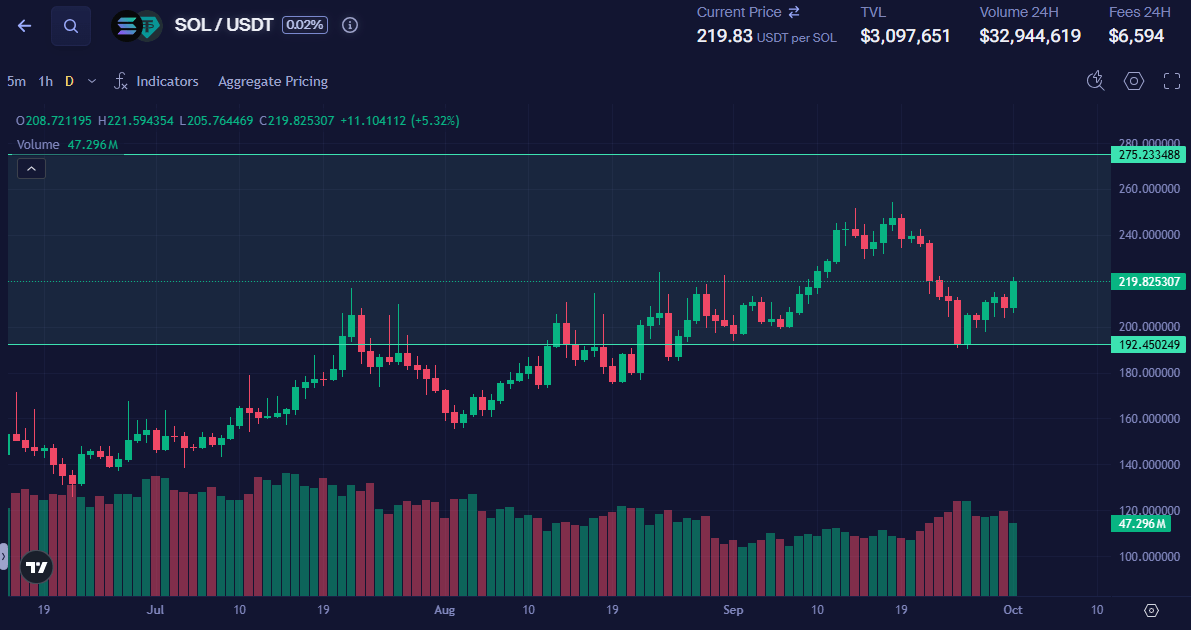
That’s where charts come in. The SOL/USDT chart gives hints of support at the bottom of my range. But charts are like weather forecasts—sometimes accurate, sometimes nonsense, and often ruined by “crypto storms” we didn’t see coming.
What Am I Really Risking?
With only $75 at stake, this is like planting a tiny herb garden. Even if SOL faceplants, I didn’t lose the farm. But if it works—if that 50% APR holds up—I gain valuable battle-tested insight for moving bigger farms later. Maybe if SOL hits $300, I’ll grab my hoe and move the whole operation there. Or maybe I’ll wander off to another crop like ETH or AVAX. The point? The soil (range) matters more than the plant (token).
The Bigger Lesson
I’m not chasing retirement Lamborghini money with this test position. What I am chasing is knowledge:
- How reliable are SOL ranges right now?
- How often will I be forced to reset positions?
- When is it worth squeezing higher yield, and when is it better to breathe easy with wider ranges?
Every dollar I “lose” is just tuition for Yield Farming University. And honestly, what’s the fun in mastering this stuff completely? Once you’ve cracked the code, there’s nothing left to brag about at the farmer’s market… except, maybe, telling your friends you grow 50% crops in digital soil while they’re still clipping coupons for their next haircut.


